
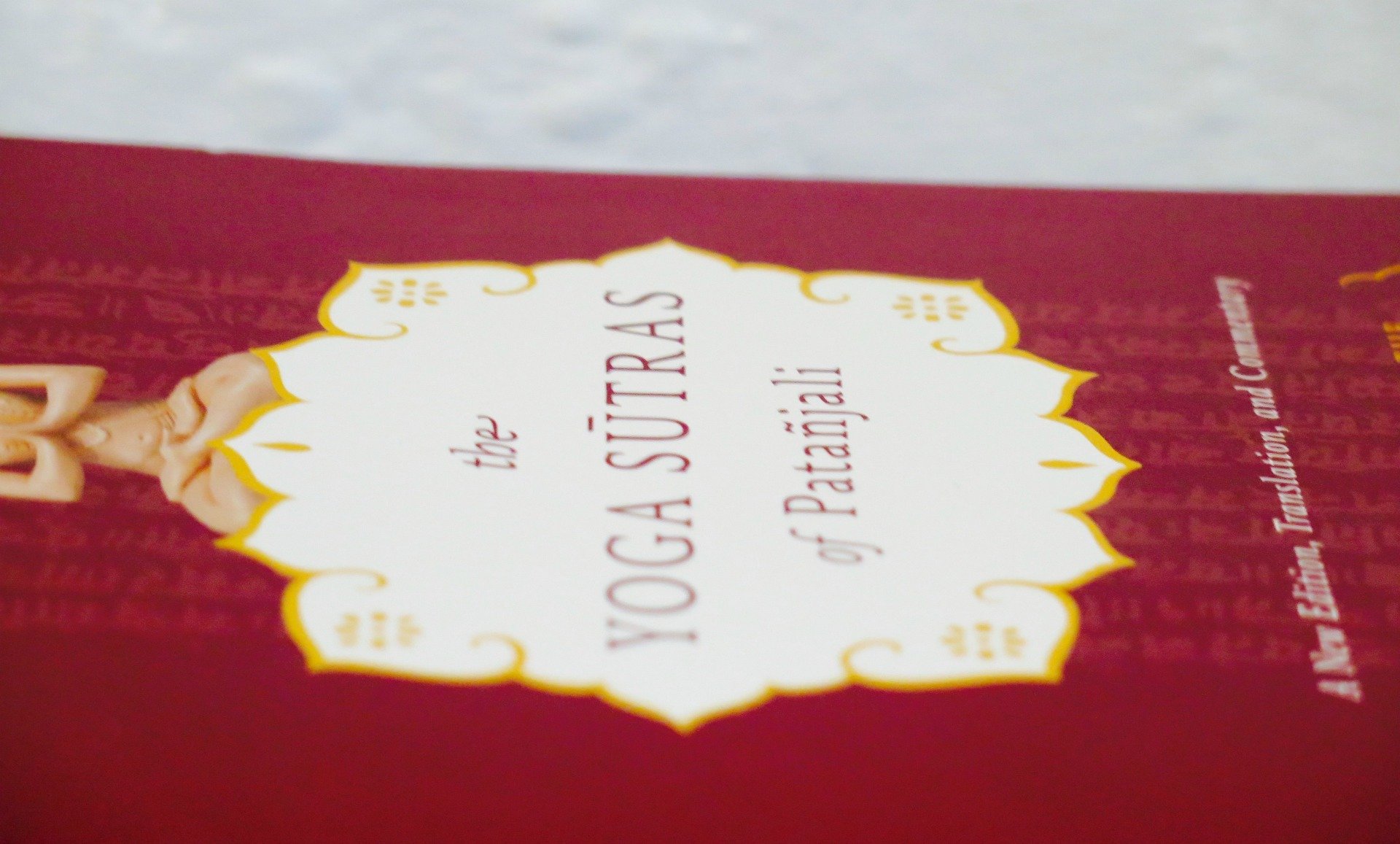
Our next instalment of the Triyoga book club with Daniel Simpson begins on Monday, 23rd September 2019. Together we’ll explore Patanjali’s Yoga Sutra, a classic text often said to be the source of yogic teachings. (Basically, it’s a must-read for anyone interested about yoga philosophy.) Ahead of this four-week journey, Daniel shares some intriguing insight about this iconic text. Book club sign-up details are also shared below.
If you’re curious about yoga philosophy, a great place to start is the
Yoga Sutra of Patanjali. It doesn’t teach lots of postures, but it’s the go-to text for the underlying theory behind yogic practice.
Among other ideas, it presents an eight-part system of yoga called
ashtanga (which means “eight limbs”). This starts with ethical guidelines and leads to absorption in deep meditation, which is defined as the goal of yoga. It is attained by concentration on an object, and is slowly refined to reach pure consciousness.
If that sounds elusive, postural practice provides a way in – the mind can focus on bodily actions to help it turn inward. However, skill is required to avoid getting stuck on the physical level. Since confusion about who we are makes this outcome more likely, Patanjali’s aim is to silence the mind and reveal our true nature.
The general objective is freedom from suffering, and he outlines a theory of mind to explain where it comes from. Instead of seeing ourselves as the witness of experience, we get lost in thoughts and misidentify with form. Yogic practice reverses the process with inward focus, striking a balance of disciplined effort and detachment.
Although the
Yoga Sutra is relatively short – its 195 lines are not much longer than a newspaper story – it can be hard to interpret. The sutra style of writing packs as much information as possible into gnomic statements. These are easy to memorise, but they leave a lot out – they’re like bullet-point notes on a teacher’s lectures.
Traditionally, they would have been explained by referring to commentaries. Most modern translations leave these out, fuelling misunderstandings. These are hard to avoid, since the text is written in complex Sanskrit. However, translators often add their own ideas to make
sutras make sense.
According to the latest scholarship, the
Yoga Sutra was probably compiled about 1600 years ago. However, many of its teachings are much older. Drawing on earlier yogic texts – such as the Bhagavad Gita – and a range of other sources including Buddhism, it’s a comprehensive summary of meditative practice.
At triyoga’s book club, we’ll be reading the
sutras chapter by chapter in four weekly sessions. Using the translation by Edwin Bryant, which summarises commentaries, our aim is to understand Patanjali on his own terms, and to explore ways of using the text in modern practice.
Ready to step onto the mat?
Join a class at Triyoga — 30+ styles across Camden, Chelsea, Ealing, Shoreditch and livestream.